The Rise of Platform Firms in Urban Mobility Markets
Abstract (manuscript in preparation)
This book charts the twenty-first century global transformation to digital capitalism.
Throughout most of the twentieth century, the global economy was dominated by manufacturing giants like GM, Siemens, and Sony. These companies employed workers by the hundreds of thousands and produced goods that were household names. This was the era of Fordism, named after the founder of one of the pre-eminent companies of the time. A socio-economic system based on large-scale production and consumption of goods, Fordism provided the foundation of the mid-twentieth-century global political economy. It was the prototypical manifestation of advanced industrial capitalism, largely centered on a Euro-American paradigm that was presented as an aspirational model to the developing world. At its core, Fordism represented a social contract between business, society, and the state. Government would provide a stable and supportive macroeconomic environment, business would provide well-paying jobs with upward mobility, and workers would spend their incomes on the goods that were being produced, thus fulfilling their dual role as employees and consumers.
The system appeared to work brilliantly—until it didn’t. Fordism went into crisis in the 1970s, then was displaced by globalization and neoliberalism in the 1980s. Yet the last several years have seen the rise of a new class of technology companies like Google, Facebook, Amazon, Airbnb, and Uber. The emergence of these companies has led many to believe that we are entering a new age of digital capitalism: a mode of capital accumulation and profit-making based on growing computational power, machine learning algorithms and “big data,” and legitimated by normative beliefs that digital technologies can provide the solution to longstanding social and political problems.
This mode of economic organization and societal governance has frequently been described as the product of rapid innovation and technological change. This explanation, however, is an illusion. Digital capitalism is not simply an outcome of developments in computational technologies. It is fundamentally driven by shifting forms of corporate power, deepening processes of financialization, and the evolving relationship between business, society and the state. The Fordist social contract is dead. Instead, digital capitalism has been enabled by the now-waning project of neoliberalism: the belief that national societies and the global economy can and should be organized through the institutional mechanism of self-regulating markets. The neoliberal ideal is exemplified by the rise of digital technologies that offer the promise of creating perfect markets through computational techniques that seamlessly connect buyers and suppliers. Platform firms use machine learning algorithms to design new markets, capturing ever-expanding scale economies through network effects. The allure of digital platforms lay in the promise of coupling economic efficiency with political liberty by providing individual buyers and sellers on both sides of the platform with freedom of choice. This was the neoliberal dream.
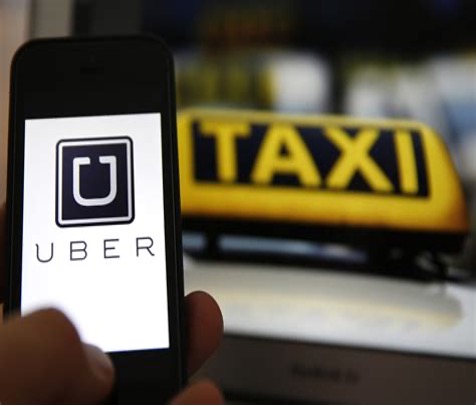
Yet digital capitalism is going much further than neoliberalism in restructuring the global economy, coupling a new nexus of financial capital with black-boxed technologies and tenuous social relations between business and labor. Ridehailing firms are at the vanguard of this digital revolution. These technology companies appealed to both policymakers and the public, enabling ridehailing platforms to precipitate a radical transformation of urban economic life: go where you want, get what you want, instantly. Yet their hyper aggressive rule breaking strategies—they regularly entered taxi markets without licenses—present vexing challenges for democratic forms of market governance. While ridehailing platforms claim to be technocratic and neutral, their business model fundamentally relies on challenging the legitimacy of public sector control.
This private challenge to public authority makes digital capitalism controversial. Indeed, Uber’s questionable moral standing has been a frequent topic of policy discourse and popular discussion. Yet while taxis have become sympathetic victims of tech disruption, many forget that prior to Uber’s arrival, taxis were not only perceived as symbols of inefficient state planning but were also associated with poor service from drivers, labor exploitation of drivers by taxi companies, and frequent instances of racial discrimination and gendered violence against passengers. Taxis are also morally ambiguous business actors in the world of contemporary capitalism.
This book focuses on these tensions and ambiguities. It assesses urban mobility markets as they actually exist: a variegated mix of large-scale, centralized, public sector providers, and relatively small-scale, fragmented, and often informalized private sector players. Urban mobility markets provide a compelling case through which to analyze the demise of neoliberalism and the dawn of digital capitalism. Platform firms constitute new modes of capital accumulation and market governance that appear to have superseded the state. This accords with conventional understandings of neoliberalism. Yet they rely on regulatory and legal rules at the municipal, national, and global levels, which structure distributions of power and authority—as well as material gains and losses—often in ways that disproportionately benefit these companies.
For this reason, I argue that the digital turn is moving us beyond neoliberalism to a new mode of capitalist relations between markets, society, and the state. My claim is rooted in scholarly debates on the role of markets in the struggle between fascism, authoritarianism, freedom, and democracy that date back to Friedrich Hayek and Karl Polanyi in the mid-twentieth century. These debates remain salient and have taken on a heightened urgency in our contemporary moment of cronyism, populism, democratic backsliding, and the rise of the new tech right, amidst increasing pervasiveness of digital technologies, including artificial intelligence.
This book brings these debates to bear on the world of digital capitalism. Admittedly, digital capitalism may seem to exemplify the ideals of neoliberalism: ridehailing platforms, for example, ostensibly rely on supply and demand within a “free” market and are often coupled with discourses of economic liberty that seem to typify Hayekian ideals. Yet as this book shows, those same platforms in fact rely heavily on the state to structure marketplace conditions that allow them to thrive. It is my goal here to illustrate how such state action works through empirical analysis of these dynamics. Across the globe, the outcome of ridehailing’s ‘disruption’ is the concentration of market power in oligopolistic platform firms, the institutionalization of increasingly precarious working conditions for drivers, and the generation of novel forms of resistance from above and below. Yet, this ‘disruption’ has also prompted surprisingly diverse and unexpected reactions in different political economies, thereby challenging taken-for-granted binaries between the Global North and Global South.
In telling this story, I chart a path between the extremes of techno-optimism and techno-pessimism. I challenge these polar accounts of digital capitalism by analyzing the competing institutional arrangements, organizational forms, and market structures that characterize urban mobility: from incumbent taxis to disruptive platform firms like Uber and Lyft in the United States, and their counterparts Bolt, Didi, Grab, Ola, and 99 in Africa, Asia, and Latin America. I argue that urban mobility markets are shaped by both moral and economic considerations—not simply because mobility is an essential public service, but also because taxis and ridehailing services like Uber represent competing models of societal governance and alternative visions of the technological future.
The book is grounded in a combination of quantitative analysis and multi-level field research. I examine not only the flow of global capital and technology, but also local policy battles and market conflicts in urban settings that include Bangalore, Bangkok, Boston, Dar es Salaam, Johannesburg, Kingston, London, Mexico City, New Delhi, New York, San Francisco, São Paulo, and Singapore. This field work comprised of interviews with platform managers, data scientists, engineers, vehicle owners, drivers, labor union representatives, municipal regulators and city leaders, providing a range of perspectives and experiences through which I narrate this story of digital capitalism.
 JASON JACKSON